For grown-ups
A calm page with the facts: what the books are, how hard they are to read, the science inside, things to print, and what this site does and doesn't do.
What the books are
Monster Mash Motors: Rookie Season is a series of ten illustrated early chapter books for ages 5 to 8. They are written to be read aloud at five and read alone at seven or eight.
Each book is about 6,000 words in ten or eleven short chapters (three to five minutes each, read aloud), with pictures in every chapter and big sound words that are fun to shout. Each one is a complete adventure: a contest in the Rumble Bowl, a rescue on Mud Mountain, a storm at Nitro Beach.
At the back of every book, Torque's Workshop explains one true science idea and gives a safe experiment to try at home with everyday things.
The books are not on sale yet. Nothing on this site takes orders or payments.
Reading levels
These numbers come from our own text checker and are measured from each book's current manuscript every time this site is built. The Flesch–Kincaid grade is only a rough guide; the real test is reading a chapter aloud.
| Book | Story words | Chapters | Reading grade | Words per sentence |
|---|---|---|---|---|
| 1. Engines On, Rumble City! | 6,186 | 10 | 1.2 | 7.2 |
| 2. Mud Mountain Mayhem! | 5,902 | 11 | 1.0 | 6.6 |
| 3. Nitro vs. Bounce: Speed vs. Air! | 5,713 | 10 | 1.0 | 6.7 |
| 4. Bridge Out at Canyon Ridge! | 6,694 | 11 | 1.4 | 6.8 |
| 5. Demolition Derby Showdown! | 5,913 | 10 | 1.4 | 7.3 |
| 6. Sandstorm at Nitro Beach! | 5,982 | 10 | 1.4 | 7.3 |
| 7. Freestyle Frenzy! | 5,640 | 10 | 1.4 | 6.7 |
| 8. The Lost Trail! | 5,999 | 10 | 1.2 | 6.8 |
| 9. The Last-Lap Switcheroo! | 5,929 | 10 | 1.4 | 6.6 |
| 10. Avalanche Alley! | 6,743 | 11 | 1.6 | 7.1 |
The science, book by book
Every science idea in the books is true, because children will try it. Each book's Workshop has the full experiment; here is the short version.
-
Book One · Engines On, Rumble City!
A triangle keeps its shape
Push on a square and it folds over into a diamond, but a triangle keeps its shape unless one of its sides bends or breaks, which is why builders use triangles to hold things up.
Try it at home: Tape drinking straws into a square and a triangle, then push each one sideways. The square squishes into a diamond; the triangle holds its shape. One more straw across a corner fixes the square.
-
Book Two · Mud Mountain Mayhem!
Levers
A lever is a long bar resting on a pivot: push down on the long end, far from the pivot, and the short end lifts something heavy with a smaller push.
Try it at home: Rest a ruler on a round pencil to make a seesaw. Slide the pencil close to a small toy boulder, press the far end, and feel how much easier it lifts.
Uses small parts: keep coins and rubber bands away from babies and toddlers.
-
Book Three · Nitro vs. Bounce: Speed vs. Air!
Momentum transfer
Motion can move from one thing into another: Nitro’s speed goes into a giant seesaw and comes out of the other end as Bounce’s jump.
Try it at home: Line up five same-size coins along a ruler and slide a sixth into the end of the line. The push travels through the line, and the last coin shoots away.
Uses small parts: keep coins and rubber bands away from babies and toddlers.
-
Book Four · Bridge Out at Canyon Ridge!
Spreading the load
When one anchor holds a load all by itself it feels all of the pull, but when three anchors share it, each one holds only a third.
Try it at home: Hang a paper cup from the table edge on one strip of paper and count coins until it tears. Then hang it on three strips: they share the pull and hold about three times as many.
Uses small parts: keep coins and rubber bands away from babies and toddlers.
-
Book Five · Demolition Derby Showdown!
Every structure has a weak point
Every structure has a weak point, usually where its parts join: find the piece that holds everything up, and one small hit can bring the whole thing down.
Try it at home: Build a tower from six paper cups, then gently slide the cups out one at a time. Which one brings down the most? That's the key piece.
-
Book Six · Sandstorm at Nitro Beach!
Curved shapes turn the wind
Curved shapes turn the wind: when wind hits the round back of a curved dune, it slides up and over the top and around the ends, so the air inside the curve is much calmer.
Try it at home: Blow through a straw at a little paper flag, then stand a curved card between you and the flag. Behind the curve, the flag goes still.
-
Book Seven · Freestyle Frenzy!
Ramp angles: distance or height
For the same speed, a steep ramp throws you high but not far, a gentle ramp keeps you low, and a ramp halfway between flat and straight up (about 45 degrees) throws you the farthest.
Try it at home: Make a paper rocket for a drinking straw and puff it off flat, halfway steep and very steep. Halfway steep goes the farthest.
-
Book Eight · The Lost Trail!
Ramps make climbing easier
A long, gentle ramp takes a smaller push to climb than a short, steep one: you go farther, but every bit is easier, and that is why mountain roads zigzag.
Try it at home: Pull a toy car up a short, steep ramp and then a long, gentle one with a rubber band. The long ramp stretches the band less: it takes a smaller pull.
Uses small parts: keep coins and rubber bands away from babies and toddlers.
-
Book Nine · The Last-Lap Switcheroo!
Drafting
A truck tucked in close behind another one feels less air pushing back, so it can keep up without working so hard: that’s drafting.
Try it at home: Tape a paper strip to the table and blow at it through a straw. Stand a block right in front of it: tucked in behind, the strip stays still.
-
Book Ten · Avalanche Alley!
Water pressure
Water pushes harder the deeper it gets, so the bottom of a dam gets the biggest push, and the safe way to empty a lake is to let it out low and wide.
Try it at home: A grown-up makes three holes up the side of a plastic bottle. Tape them, fill the bottle, then pull the tape: the bottom stream shoots out the farthest.
The promise: maximum destruction, zero harm
Loud without being aggressive. Destructive without being violent. Intense without being scary.
- Things break: walls, barriers, towers, ramps and rocks. Nobody is ever hurt, and everything gets built again.
- Every vehicle in Rumble City is alive, so nothing ever hits, crushes or wrecks a car. In the arena the trucks smash walls and towers, never each other.
- There are no humans anywhere in the world: no drivers, and nobody inside any window.
- Every superpower has a limit, and the limits make the stories: two stomps a day, one ten-second boost, five seconds flat as a pancake.
- Diesel is a rival, never a villain. He bends the rules but never breaks them.
- Scary moments are short. The crew is always on the way, and every problem is solved by working together.
Coloring pages
Each one opens as a big picture. Print it from your browser (landscape works best) and grab the crayons.
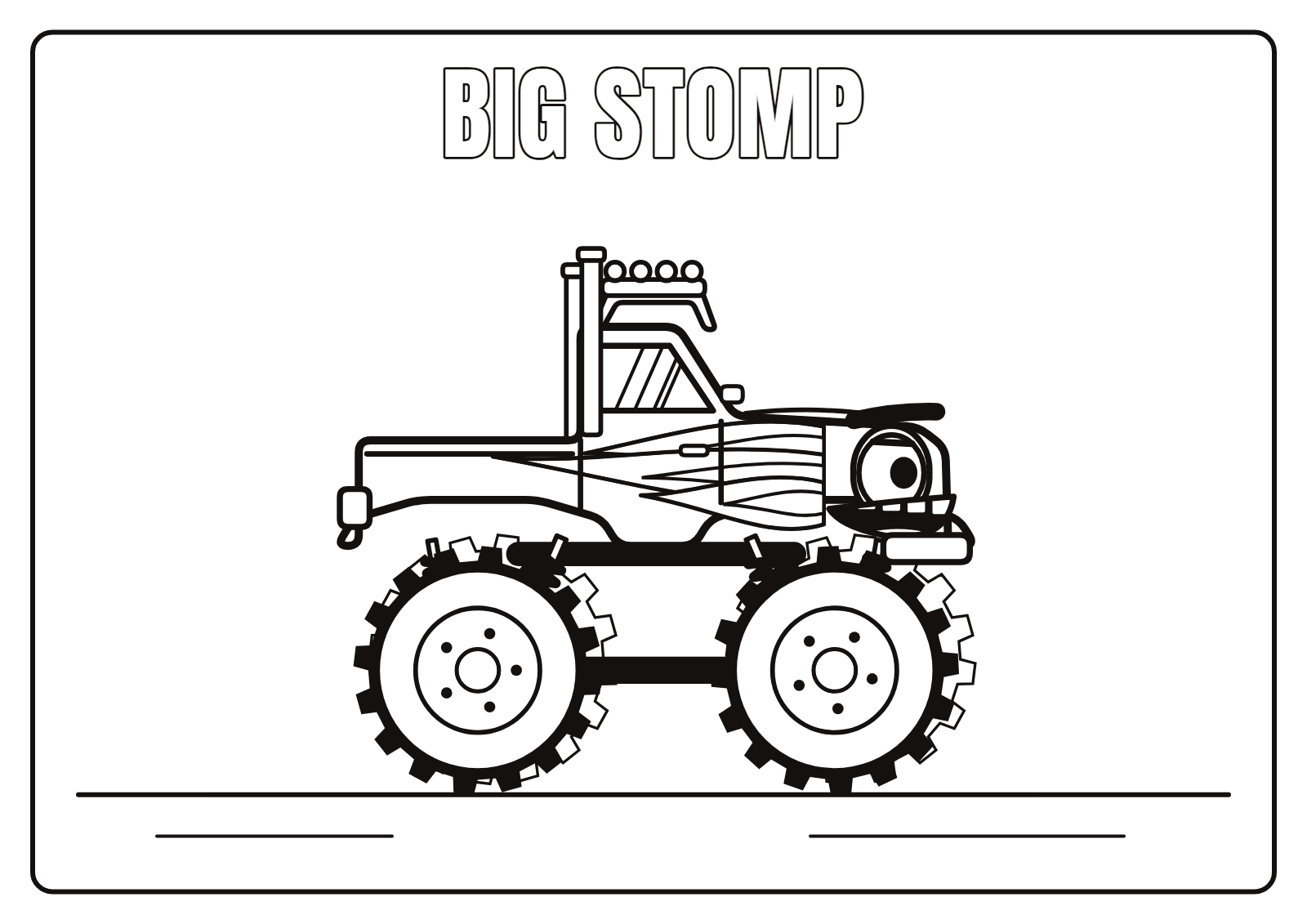
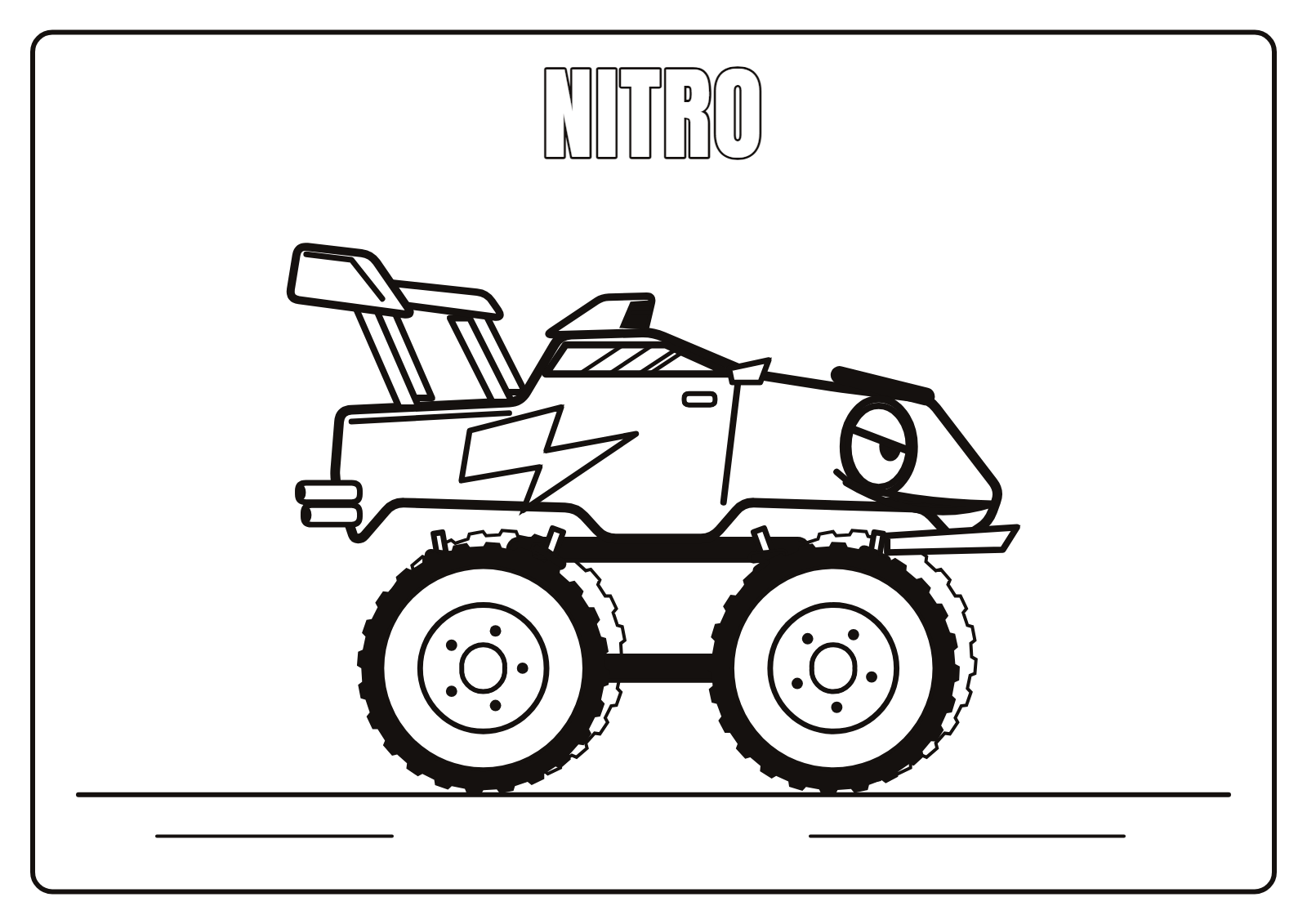
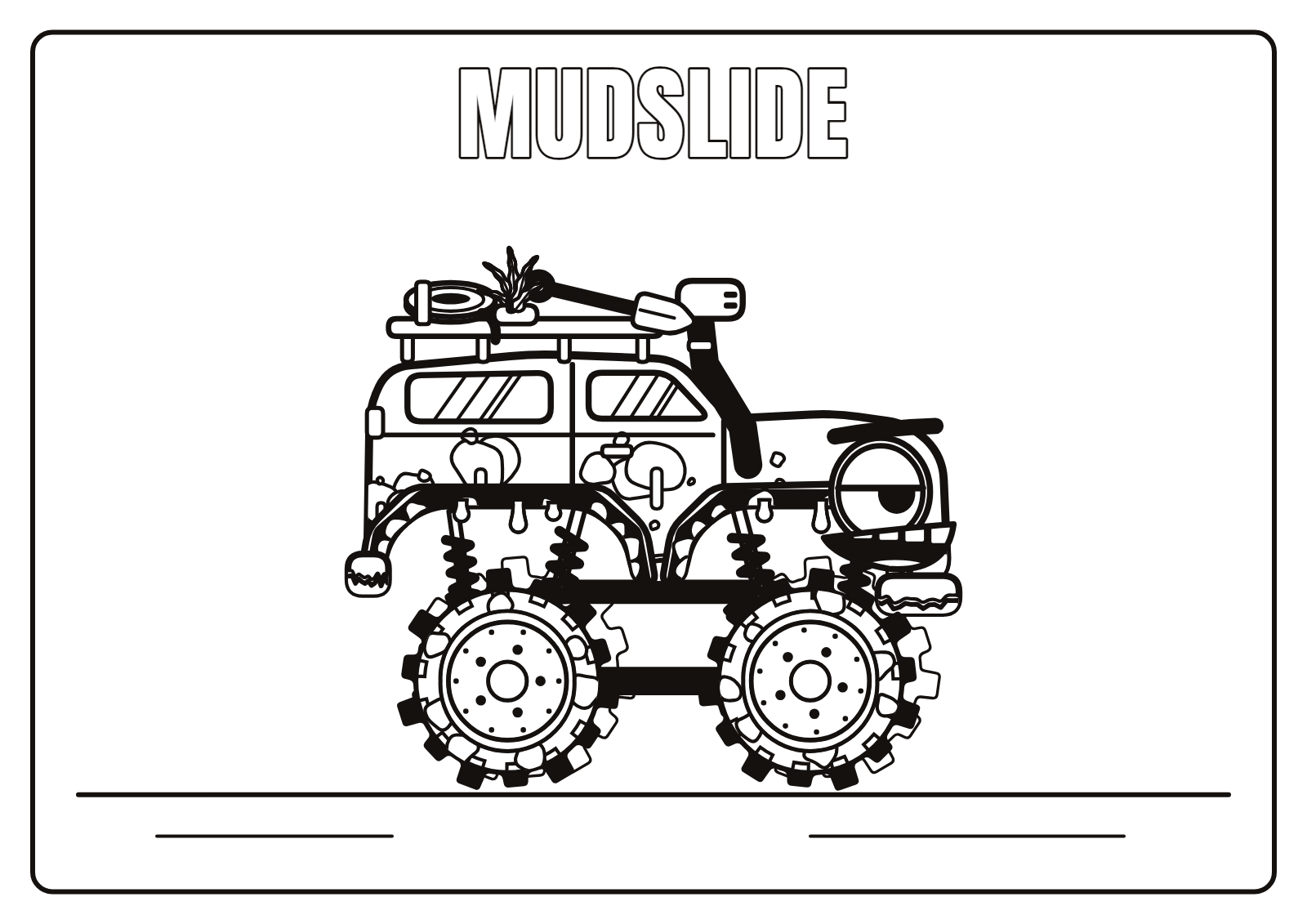
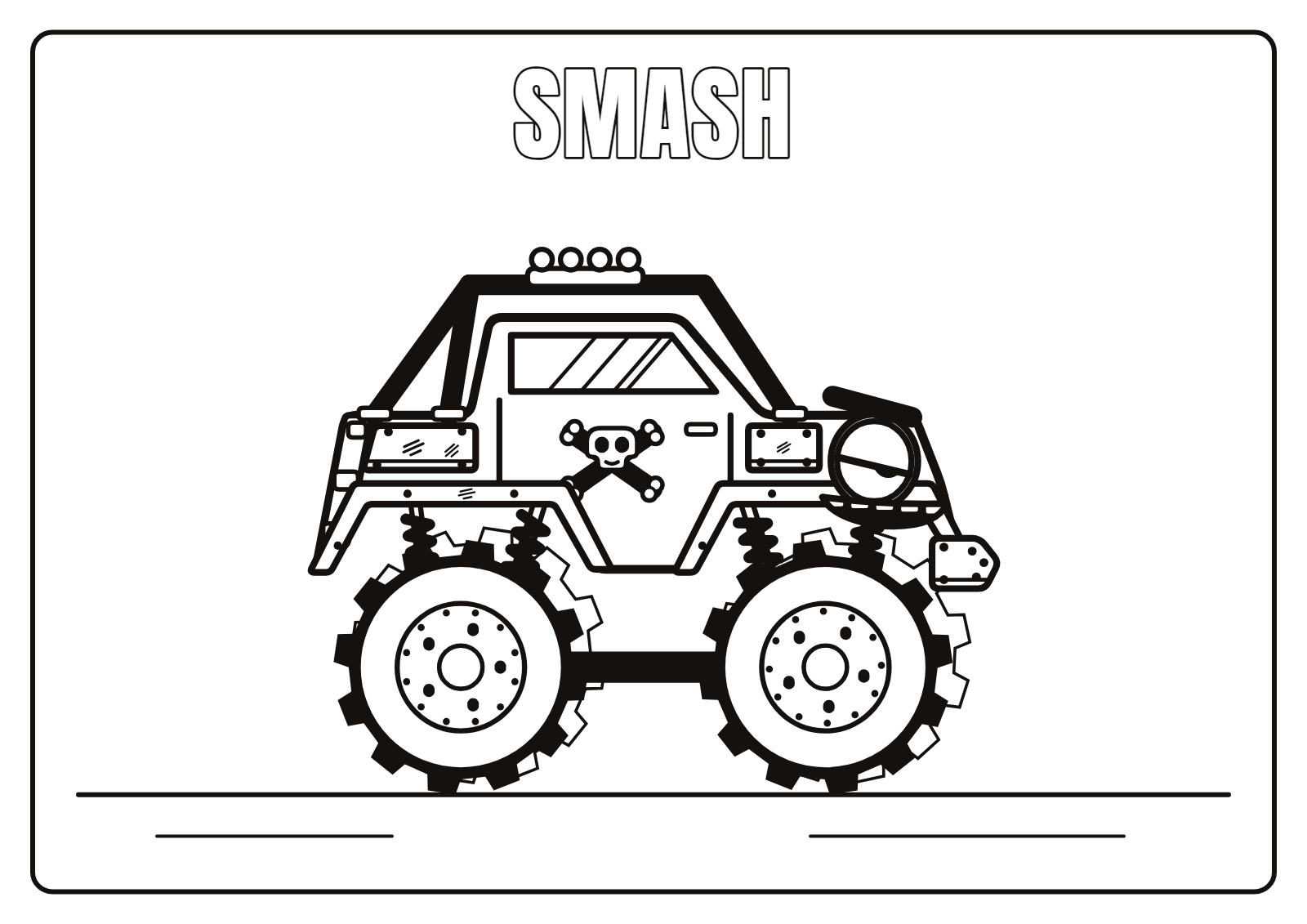
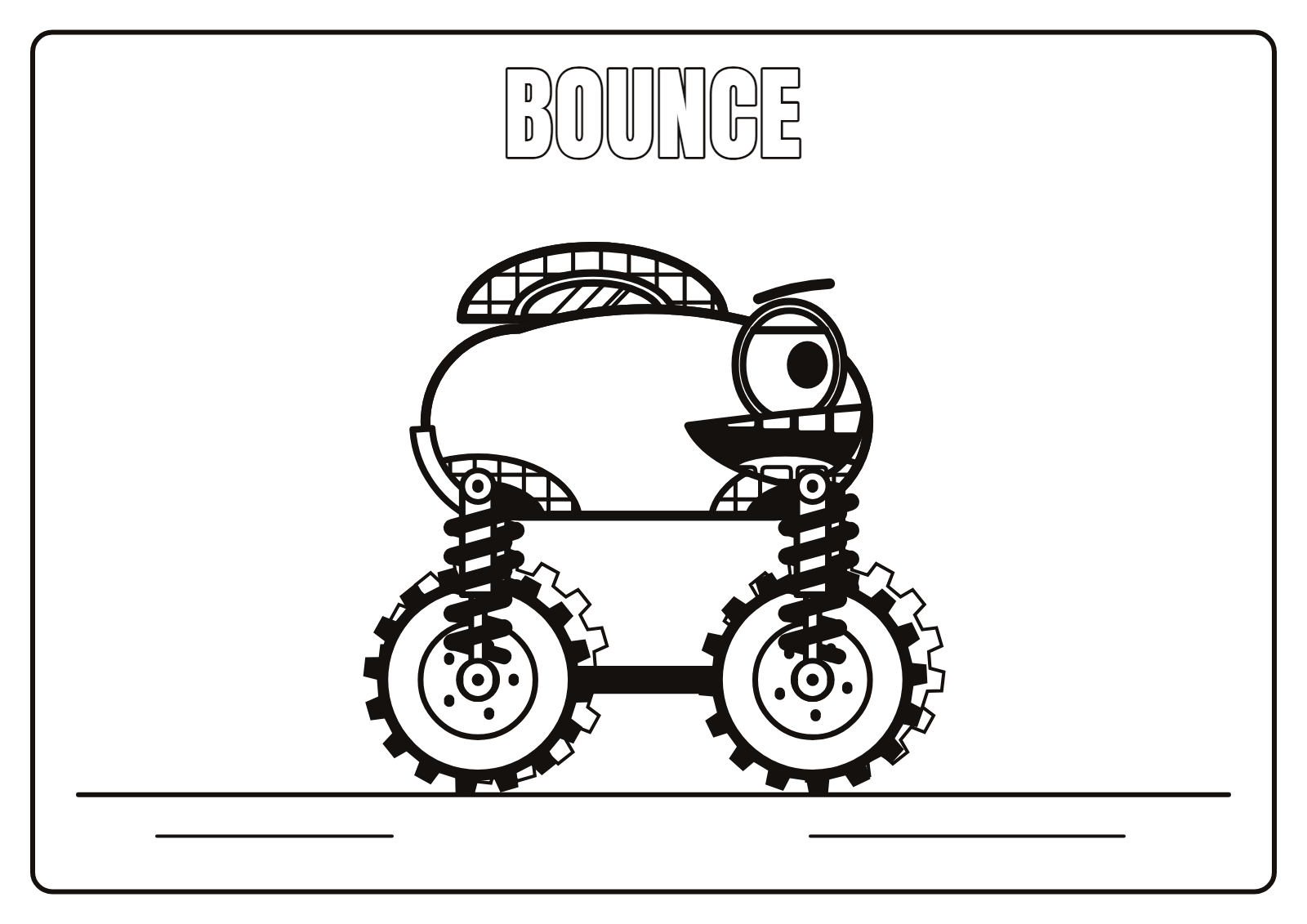
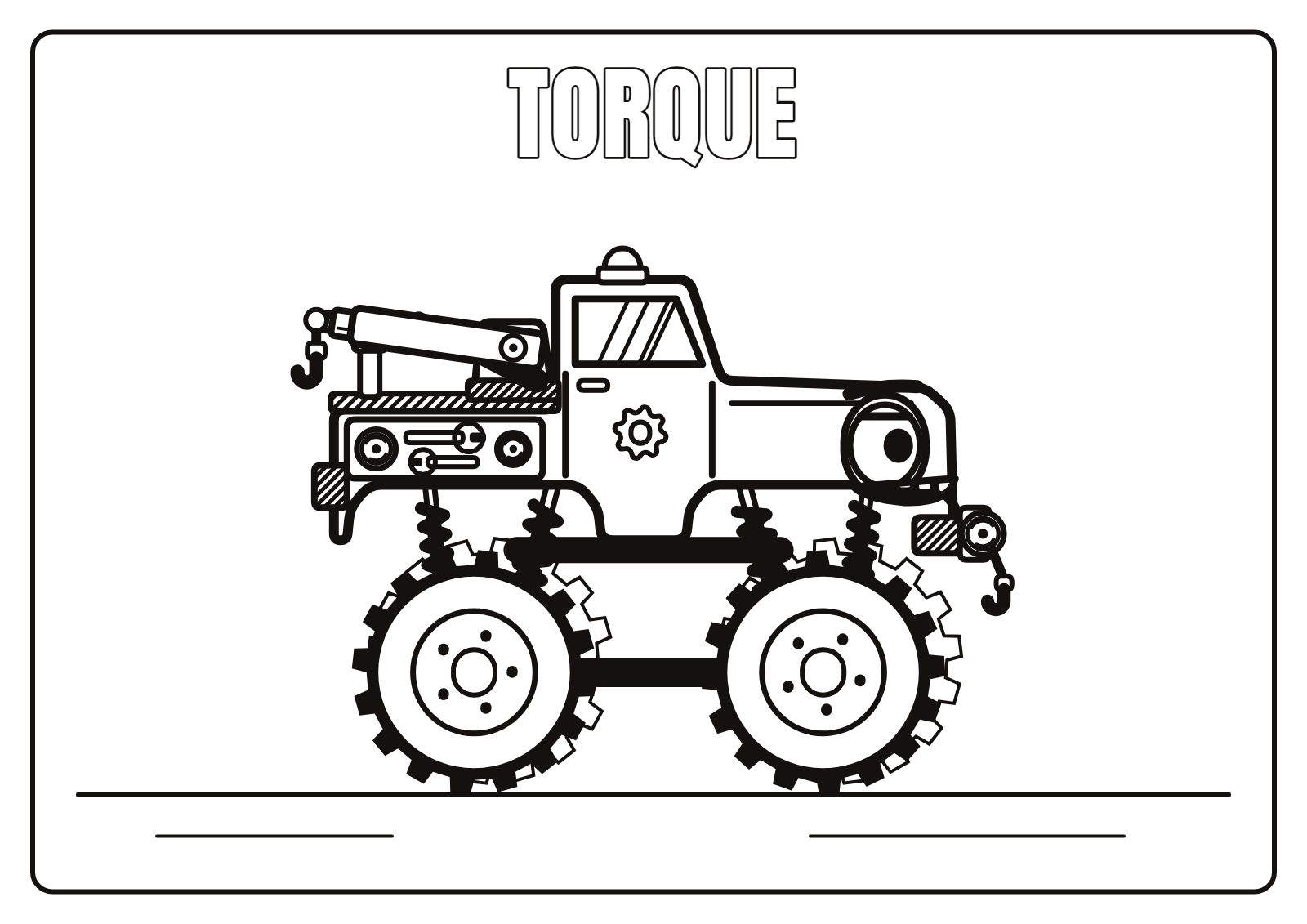
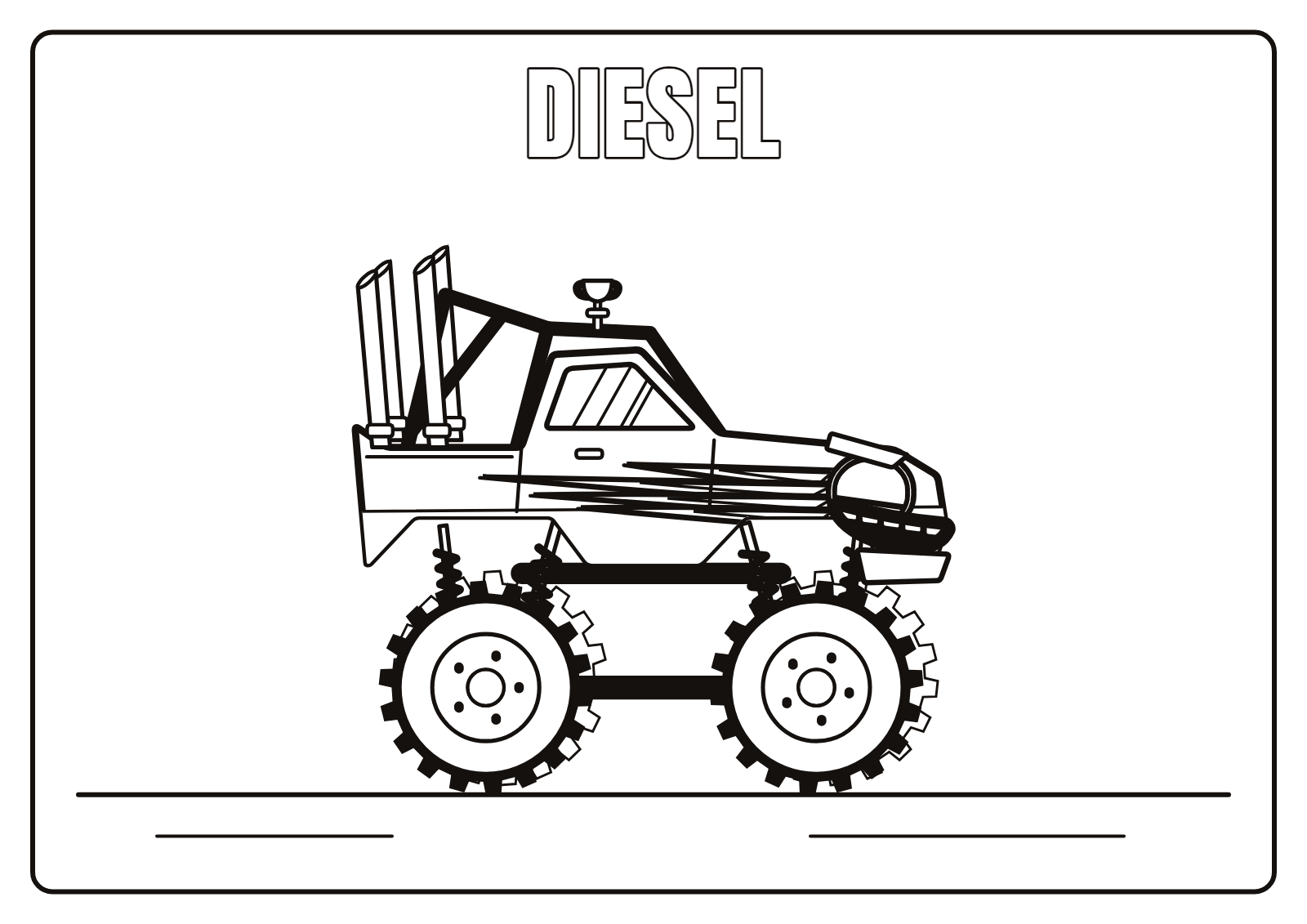
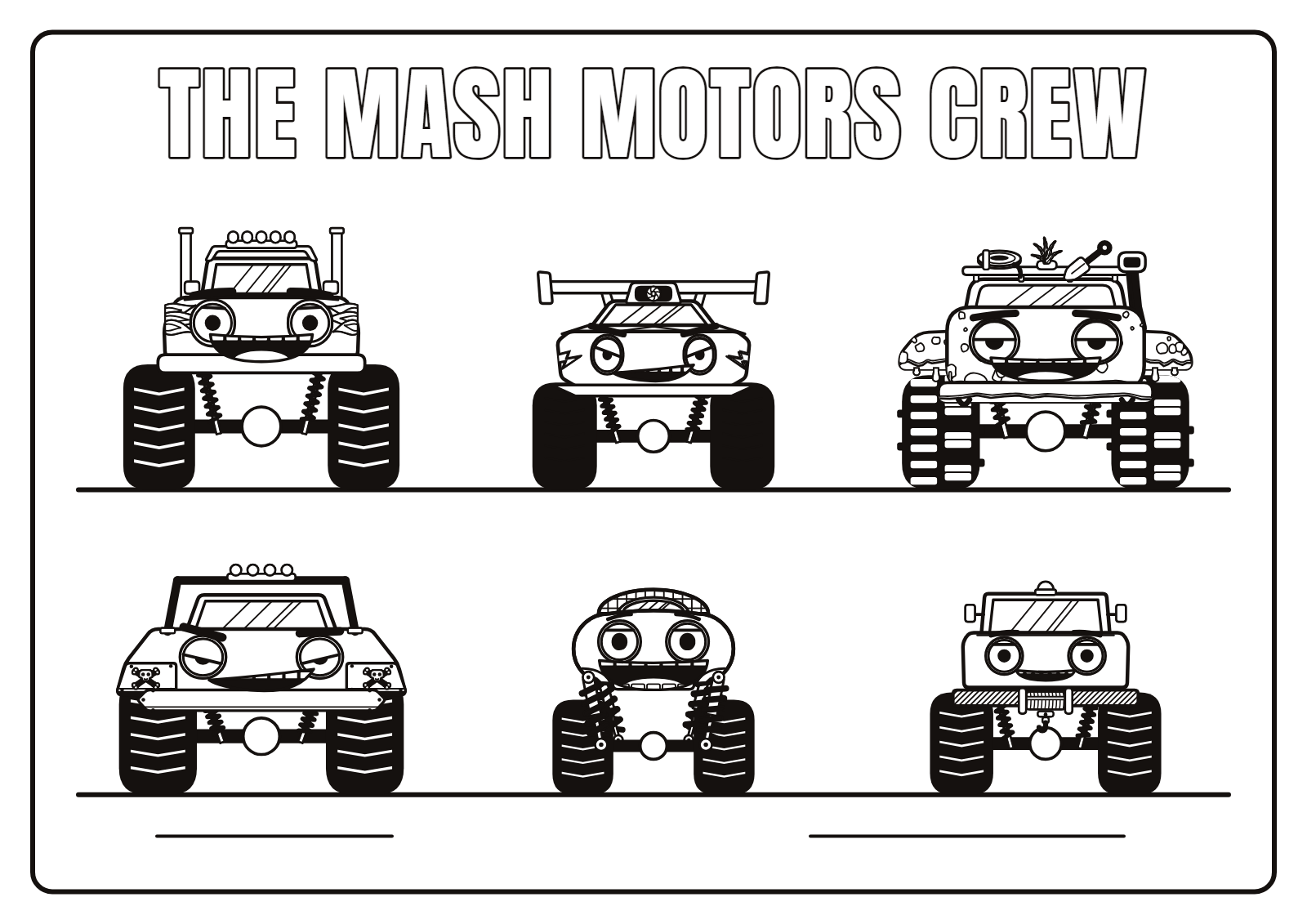
Privacy
- No accounts, no sign-ups, no ads, no chat, no analytics and no tracking of any kind. Nothing a child does here is sent anywhere.
- The site loads nothing from any other website. The fonts, pictures, videos, narration and music all come from this site, and every other sound is made on the spot by the browser.
- What this device remembers: whether Sound, Music and Motion are switched on, the Pit Pass badges (with the day each was earned) and each game's best scores. For this visit only, the browser also keeps the music's place, so it doesn't restart on every page. To forget the badges, press Clear my pass on the Pit Pass page. To forget everything, clear this site's data in your browser.
- Anything typed into a game, like a truck's name, stays on this device and is never shown to anyone else.
- Links that leave this site ask a grown-up first.
Sound
Sound is off until someone switches it on with the Sound switch at the top of every page. Every engine and effect is made by the browser as it plays. The Music switch beside it adds our own theme tune, quietly, and only while Sound is on too. The trailer and the Chapter One read-alongs play only when someone presses play. Both switches remember their settings on this device.
Accessibility
- Everything works with a keyboard, a mouse or a touch screen, and the focus is always easy to see.
- Buttons are big: at least 48 pixels, and at least 64 for the youngest players' game buttons.
- Pages can be read without JavaScript. Where a game can't run, a picture and a note take its place.
- The Motion switch (and your device's reduce-motion setting) turns off animation and camera shake. Nothing flashes more than three times a second.
- Reading text is set in Lexend, a typeface designed for easier reading, with strong contrast.
Contact
Questions about the books or this site? Write to the publisher.
Greenlight Publishing · www.greenlight-publishing.com · hello@greenlight-publishing.com